Baccarat and Probability: How the Game’s Rules Affect the Outcome

Baccarat and Probability: How the Game’s Rules Affect the Outcome
Baccarat is one of the oldest and most elegant casino games, yet also one of the most misunderstood. Many associate it with luxury and high stakes, but beneath its simple surface lies a game governed by strict rules and precise probabilities. To understand why the house almost always has a small edge – and why some bets are statistically better than others – it’s worth looking closely at how the rules shape the outcome.
A Game of Fixed Rules
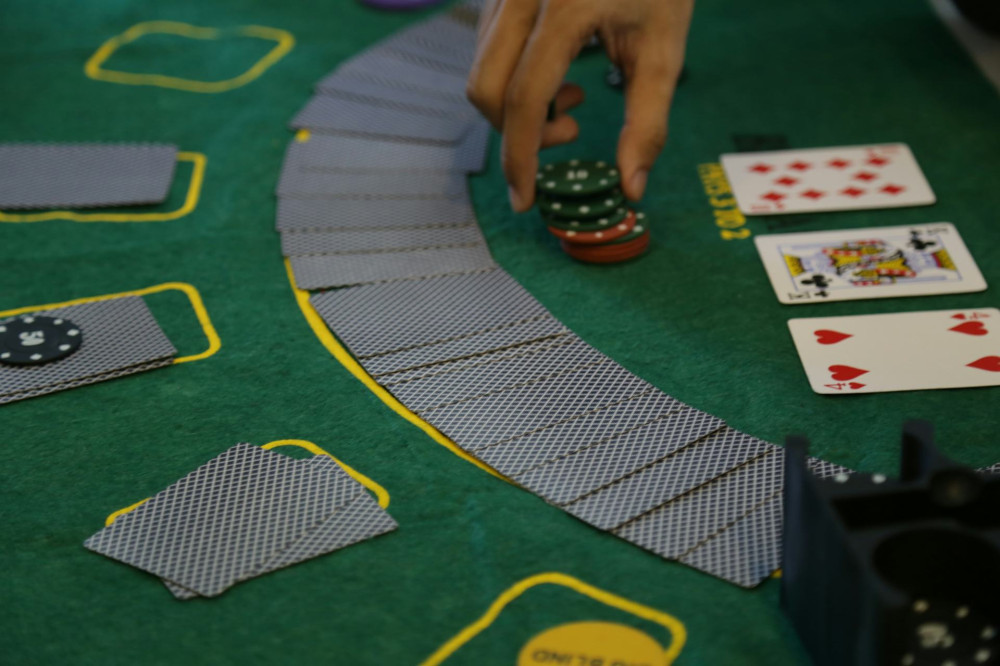
Unlike many other casino games where player decisions can influence the result, baccarat follows a rigid set of rules. The game is played between two hands: the Player and the Banker. Each hand receives two cards, and in some cases, a third card is drawn according to specific rules. The goal is to get as close as possible to a total of nine.
Card values are straightforward: aces count as 1, tens and face cards as 0, and all other cards are worth their face value. If the total exceeds 9, only the last digit counts – for example, 7 + 8 = 15, which counts as 5.
Because the drawing rules are fixed, baccarat is not a game of strategy in the traditional sense. Instead, it’s about understanding the probabilities behind the three possible bets: on the Player, on the Banker, or on a Tie.
The Probability of Winning
Although baccarat may appear random, the probabilities are well established. Statistically, the Banker’s hand wins slightly more often than the Player’s – around 45.8% of the time compared to the Player’s 44.6%. The remaining hands end in a tie.
This small difference arises from the drawing rules. The Banker acts second and therefore has a slight informational advantage. To balance this, casinos charge a 5% commission on Banker bet winnings. Without that commission, the Banker bet would be too favourable to the player.
The Tie bet, which usually pays 8 or 9 to 1, might seem tempting, but the probability of a tie is only about 9.5%. That means the house edge on this bet is much higher – often over 14%. For that reason, experienced players tend to stick to the Banker or Player bets.
The House Edge – and What It Means
The house edge represents the casino’s average profit on each bet over time. In baccarat, this edge is among the lowest of all casino games:
- Banker bet: about 1.06%
- Player bet: about 1.24%
- Tie bet: about 14.4%
This makes baccarat one of the fairest games available, provided you choose the right bets. Over many rounds, the house will still win, but the margin is far smaller than in games like roulette or slot machines.
Læs også:

Why the Rules Make the Game Fair
Baccarat’s fixed rules ensure that neither the player nor the dealer can influence the outcome through decision-making. Every action – whether a third card is drawn or not – follows a universal table used in casinos worldwide. This consistency makes the game transparent and allows probabilities to be calculated with great accuracy.
For players, this means there’s no secret strategy to “beat” the house. The best approach is to understand the rules, make the statistically sound bets, and play responsibly.
Myths and Misconceptions
Many players believe they can spot patterns in baccarat – for example, that after several Banker wins, the Player is “due” to win. In reality, each round is independent of the last. The probabilities don’t change based on previous outcomes.
Others rely on betting systems, such as doubling their stake after a loss. But since each hand is random, these systems don’t alter the underlying odds – they simply increase the risk of large losses.
A Game for Those Who Appreciate Simplicity
Baccarat is a game where elegance meets mathematics. It requires no complex decisions, yet rewards those who understand probability and play with discipline. For many, it’s precisely this combination of simplicity and structure that makes the game so appealing.
Whether you play for entertainment or with an analytical mindset, it’s worth remembering that baccarat is ultimately a game of small margins – and that over time, it’s the rules, not luck alone, that determine the outcome.
Læs også: