Train Your Brain with Blackjack – Concentration, Memory and Analysis in Practice


Train Your Brain with Blackjack – Concentration, Memory and Analysis in Practice
Blackjack is often associated with casinos, green felt tables and quick decisions. Yet behind its simple surface lies a mental challenge that can be surprisingly beneficial for the brain. Playing blackjack is not just about luck – it demands concentration, memory and analytical thinking. When approached thoughtfully, the game can serve as a form of mental exercise, helping you strengthen your focus, strategic thinking and decision-making under pressure.
A Game That Demands Sharp Concentration
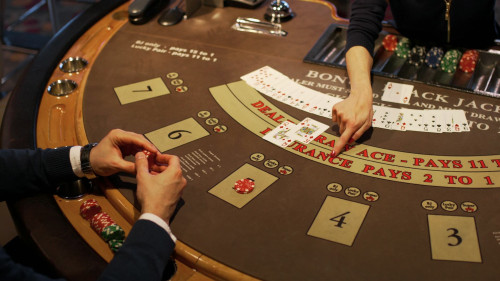
In blackjack, you must constantly pay attention to your own cards, the dealer’s visible card and the choices you make. A moment’s distraction can mean the difference between winning and losing. This constant attention training is a bit like mindfulness in action – you have to stay present and respond to what’s happening right now.
For many players, it becomes an exercise in maintaining focus even when the environment is noisy or the tension rises. That ability to stay calm and attentive can easily transfer to everyday life – whether you’re handling a stressful situation at work or making quick decisions on the go.
Memory as Your Key Tool
Although blackjack doesn’t require memorising long sequences, memory still plays a central role. You need to remember which cards have already been played and use that information to assess the probabilities of what might come next. This is where many players begin to develop their ability to think in patterns and probabilities.
Training this kind of working memory – the ability to hold and process information in your mind – can have positive effects in other areas. Research suggests that people who regularly challenge their working memory often become better at planning, problem-solving and learning new skills.
Analysis and Strategy in Practice
Blackjack is one of the few casino games where the player’s decisions genuinely influence the outcome. That means you can use strategy to improve your chances. The so-called “basic strategy” is based on mathematical probabilities and guides you on when it’s statistically best to hit, stand, double or split.
When you play strategically, you’re training your analytical thinking. You learn to assess risks, consider scenarios and make decisions based on data rather than impulse. It’s a mindset that can be applied far beyond the gaming table – from financial planning to project management.
Læs også:

Managing Pressure and Emotions
One of the greatest mental challenges in blackjack is staying calm when things go up and down. The thrill of winning – and the frustration of losing – can easily cloud your judgement. That’s why the game also serves as an exercise in emotional control.
Being able to make rational decisions even when adrenaline is running high is a valuable skill. Many players find that they become better at handling pressure and keeping a clear head in stressful situations – both at the table and in everyday life.
Playing as Mental Training – in Moderation
While blackjack can be a great way to challenge your mind, it’s important to remember that it’s still a game involving money. The mental training comes when you play responsibly and view the game as an exercise in concentration and analysis – not as a shortcut to quick profit.
If you want to use blackjack as mental training, it’s a good idea to play free versions online or with symbolic stakes. That way, you can enjoy the cognitive benefits without the risk of financial loss.
A Game of Logic and Self-Control
At its core, blackjack is a game of balance – between risk and reason, between intuition and strategy. It’s precisely this balance that makes the game so fascinating and mentally stimulating. When played with care, it can help you not only improve your skills at the table but also strengthen your ability to think clearly, remember effectively and act with composure.
So next time you sit down at a blackjack table – whether in a casino or online – see it as more than just a game. See it as a training ground for your brain, where you practise thinking fast, remembering sharply and making smart, well-balanced decisions.
Læs også: